01
Long-term maintainabilityGearlinux is continuously evolved so supported products can stay current instead of accumulating avoidable technical debt.
A modern embedded Linux platform for resilient network, edge, and OEM products. Gearlinux combines an immutable firmware foundation, open-source technology, Gearlinx software IP, secure lifecycle management, automation, containers, and cloud or local management in one adaptable platform.
 GEARLINUX / PLATFORM STATUS
Stop treating embedded software like a one-time build.
Products live for years. The software inside them has to keep up with security fixes, new protocols, new applications, changing hardware, and new customer requirements without turning every update into a major engineering project.
Gearlinux is continuously evolved so supported products can stay current instead of accumulating avoidable technical debt.
Key packages and public security issues are reviewed as part of the ongoing software lifecycle and firmware release process.
Linux, open-source software, APIs, containers, and familiar management interfaces create a flexible base for product development.
OEM programs can combine customer IP, open-source components, and the Gearlinx software foundation around a target product.
Gearlinux projects are designed to combine the pieces a product needs without confusing who owns what.
Customer applications, product logic, algorithms, or other proprietary software can remain customer intellectual property.
Applications, hardware configuration, configuration schema, management frameworks, and other Gearlinx software IP.
Linux kernel and other OSS packages retain their applicable open-source licenses and are managed as part of the complete build.
Gearlinux is built around Linux and extensive use of open-source software, with Gearlinx integrating, testing, maintaining, and packaging the complete system for supported hardware.
Current Gearlinx materials reference technologies including BusyBox, OpenVPN, WireGuard, modern WebUI and CLI management, IPv4/IPv6, serial logging, and OpenID-based single sign-on on supported products.
The exact feature set depends on hardware and project scope, but Gearlinux provides a mature foundation for resilient, connected products.
A controlled firmware image helps create a predictable software state and a cleaner approach to upgrades, rollback planning, and support.
Gearlinx reviews important packages and publicly announced security issues, then incorporates fixes and updates into the supported software lifecycle.
Supported Gearlinx platforms use REST API, Zero Touch Provisioning, Python, and structured management interfaces to automate deployment and operations.
OCI and Docker container support on supported platforms lets teams add applications and services without rebuilding the entire embedded system around each workload.
Gearlinux integrates the networking, VPN, remote-access, logging, and device-management functions needed to support connected edge and network products.
Manage supported systems through cloud workflows, a local structured HTTPS interface, or SSH-based command-line access depending on the deployment model.
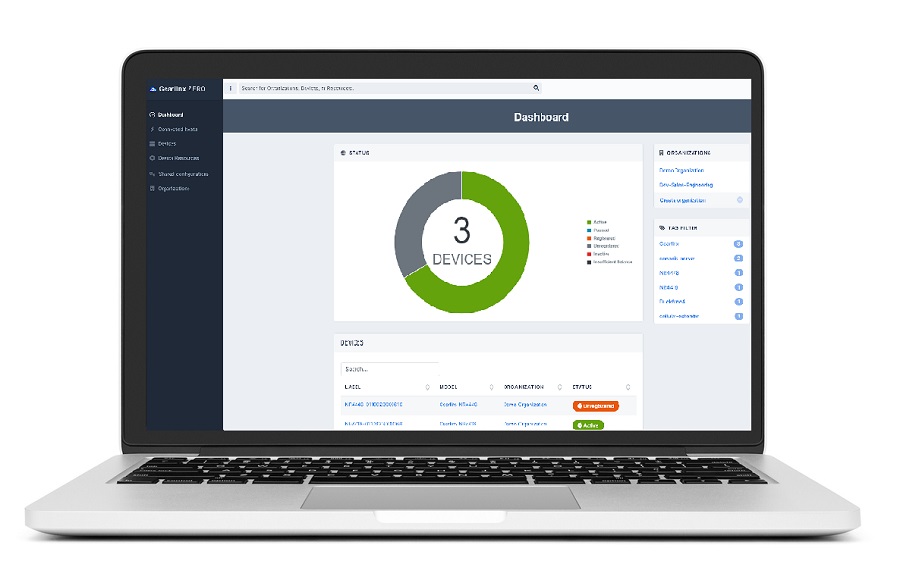
Gearlinux can operate as a standalone firmware platform, while ZERO adds centralized management for organizations that want visibility and control across devices, sites, and fleets.
Gearlinux can be adapted as an OEM embedded-software foundation for companies building connected network, industrial, power, edge, or infrastructure products. The commercial model can be structured around the target hardware, software scope, support, and optional cloud services.
A mature Linux foundation, hardware enablement, management framework, secure update discipline, reusable networking and application components, and engineering experience that can shorten the path from prototype to production.
Target hardware, interfaces, protocols, product behavior, management model, and customer experience.
Enable the hardware platform and extend the software around the product requirements.
Add customer applications and product-specific logic while preserving clear IP boundaries.
Move into production with an ongoing software, security, update, and support strategy.
Typically remains the customer's intellectual property.
Remains governed by applicable open-source licenses.
Gearlinx applications, configuration, schema, management, and other proprietary components.
For Advanced Converter Solutions, Gearlinux was expanded for a new hardware architecture and software requirements around DC/DC converter management. The project demonstrates the platform's ability to support OEM development rather than being limited to a fixed console-server image.
Read the OEM deployment story →Gearlinux is maintained as an evolving platform rather than a frozen code branch that gets harder to support every year.
Monitor key packages, upstream changes, public vulnerabilities, and critical software dependencies.
Bring selected kernel, library, application, bug, and security updates into the supported Gearlinux build.
Validate the complete firmware system against supported platforms and release requirements.
Deliver firmware updates and new capabilities through the supported product or OEM lifecycle.
Gearlinux is the embedded software layer underneath Gearlinx hardware, with ZERO providing the centralized cloud-management layer.
Gearlinux powers the NR4400 software environment, including Total OOB® management, modern GUI/CLI, automation, containers, edge compute, and secure remote access capabilities on supported models.
Gearlinux provides the software foundation for compact cellular OOB deployments with local management, secure access, serial logging, automation, and ZERO integration.
ZERO centralizes provisioning, device and location management, reporting, firmware lifecycle, fleet operations, and other cloud-managed workflows around supported Gearlinux systems.
Answers about Gearlinux, OEM deployment, lifecycle management, and how the platform fits with Gearlinx products.
Gearlinux is Gearlinx's embedded Linux software distribution and firmware platform. It provides the operating-system foundation, device management framework, networking, security, automation, and integration capabilities used across Gearlinx hardware and supported OEM projects.
Yes. Gearlinux firmware is delivered as an immutable image. This approach helps create a predictable software state and supports controlled firmware upgrades rather than allowing the underlying operating-system files to drift over time.
Gearlinx reviews key packages, monitors security issues, and delivers regular rolling releases with bug fixes, security updates, and new capabilities. Critical fixes can be handled outside the normal release cycle when urgency requires it.
Yes. Gearlinx can adapt Gearlinux as an OEM embedded-software foundation for supported third-party hardware. OEM projects are scoped around the target hardware, required interfaces, applications, management model, and commercial support requirements.
Gearlinux projects can combine customer proprietary code, open-source components, and Gearlinx proprietary platform components. Customer proprietary code typically remains customer intellectual property, open-source software retains its applicable licenses, and Gearlinx platform components remain Gearlinx intellectual property unless a project agreement states otherwise.
No. Gearlinux can support local HTTPS and SSH-based management, while ZERO adds centralized cloud management, provisioning, firmware lifecycle, reporting, device visibility, and fleet operations. OEM projects can also be designed with an optional cloud model where appropriate.
On supported Gearlinx platforms, Gearlinux supports OCI and Docker containers, REST API workflows, Zero Touch Provisioning, and Python-based automation. The exact feature set for an OEM implementation depends on the target hardware and project requirements.
Gearlinux is the software foundation used on Gearlinx NR Series and Duckfone products. It has also been extended for an OEM customer deployment on a different hardware architecture, demonstrating that the platform can be adapted beyond Gearlinx-branded appliances.
Talk with Gearlinx about Gearlinux for Gearlinx infrastructure, embedded software development, or an OEM platform that needs a faster path from prototype to production.